Question 1
Which of the following statements is true?
Why — Explanation
Asphalt in good condition gives the tyres a good level of grip. It does not increase the braking distance, and worn asphalt reduces grip rather than only affecting braking.
Classificação das vias
82 questions
Question 1
Why — Explanation
Asphalt in good condition gives the tyres a good level of grip. It does not increase the braking distance, and worn asphalt reduces grip rather than only affecting braking.
Question 2
Why — Explanation
Diesel on the road cuts tyre grip sharply, so braking becomes less effective and the motorcycle needs a greater distance to stop.
Question 3
Why — Explanation
On motorways traffic moves fast, so before any manoeuvre riders must use the mirrors to judge the higher approach speeds of other vehicles.
Question 4
In the real exam this question shows a picture.
Why — Explanation
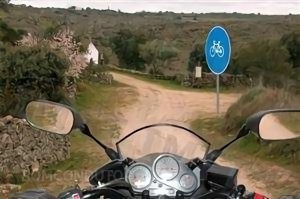
A lane reserved for bicycles may not be used by motorcycles, even though both are two-wheeled vehicles.
Question 5
In the real exam this question shows a picture.
Why — Explanation
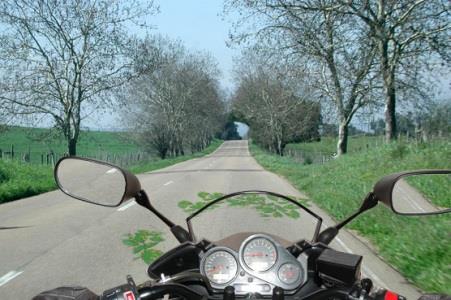
Fallen leaves form a slippery layer between the tyres and the asphalt, so grip is reduced.
Question 6
Why — Explanation
A wet surface reduces friction between the tyres and the road, so grip falls and instability rises.
Question 7
In the real exam this question shows a picture.
Why — Explanation
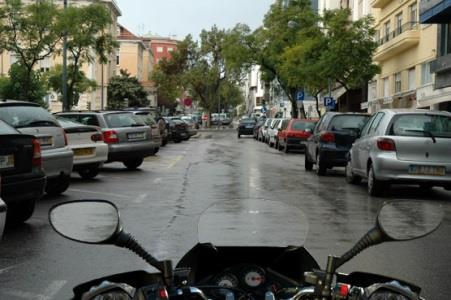
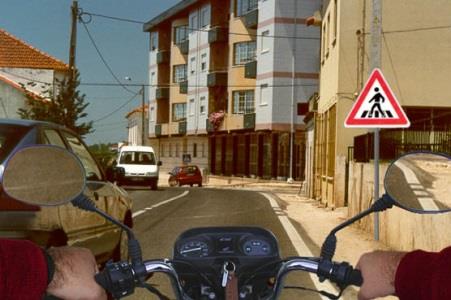
Built-up areas have pedestrians, frequent junctions, shops and varied traffic, which create more distractions.
Question 8
In the real exam this question shows a picture.
Why — Explanation
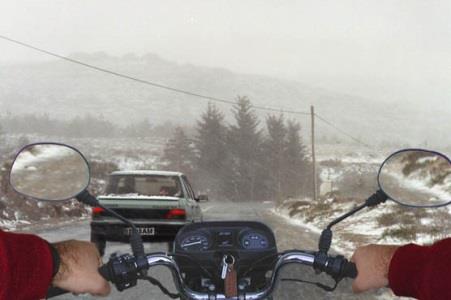
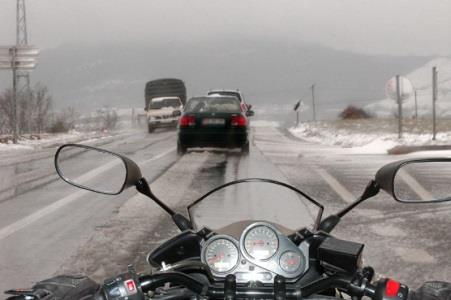
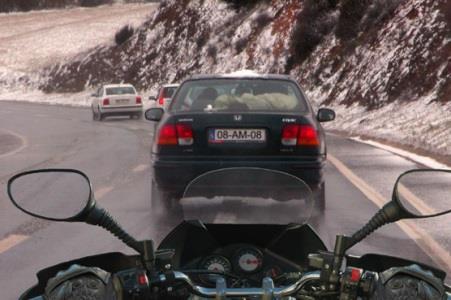
In adverse conditions such as snow or ice, tyre grip falls sharply and visibility is reduced, so the rider must moderate speed and increase safety distances.
Question 9
In the real exam this question shows a picture.
Why — Explanation
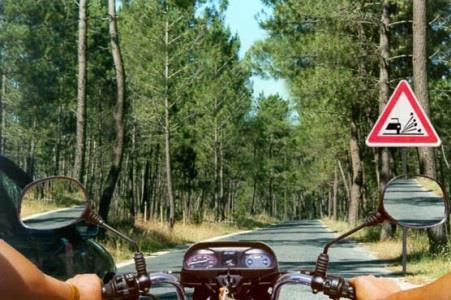
The sign warns of loose gravel on the road. Loose stones reduce tyre grip and can seriously affect the stability of a two-wheeled vehicle.
Question 10
In the real exam this question shows a picture.
Why — Explanation
The road is divided by a continuous longitudinal line, and it is forbidden to ride over or cross a continuous line to overtake.
Question 11
Why — Explanation
Aquaplaning occurs when a film of water builds up between the tyres and the road surface, so water on the road is the essential factor behind it.
Question 12
In the real exam this question shows a picture.
Why — Explanation
Only motorways guarantee that all junctions are grade-separated. On other public roads the rider can find level junctions.
Question 13
Why — Explanation
Tracks open to public traffic are public roads and are fully subject to the rules of the Highway Code.
Question 14
Why — Explanation
Larger wheels cross small depressions more easily without sinking in, so the motorcycle stays more stable and the ride is safer and more comfortable.
Question 15
Why — Explanation
On wet or slippery surfaces tyre grip falls, so the braking distance increases, not decreases.
Question 16
In the real exam this question shows a picture.
Why — Explanation
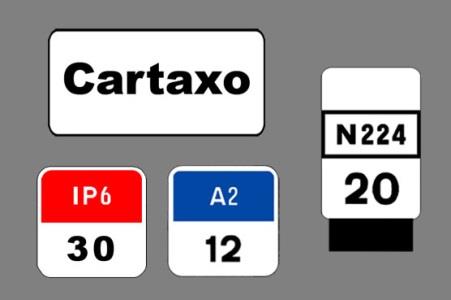
Green-background signs identify main routes (itinerários principais). On motorways the direction and confirmation signs have a blue background.
Question 17
In the real exam this question shows a picture.
Why — Explanation
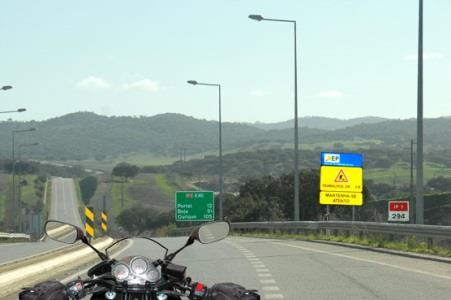
The green confirmation sign and the red kilometre marker with the IP2 code clearly identify a main route (Itinerário Principal, IP).
Question 18
Why — Explanation
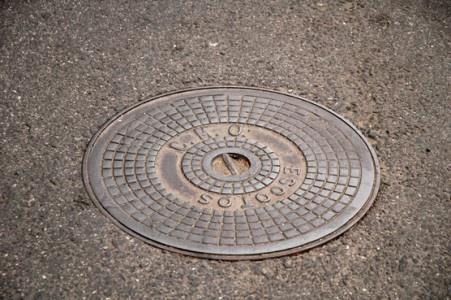
Metal manhole covers give much less grip than asphalt, especially when wet, which is a serious risk for a vehicle that balances on two wheels.
Question 19
Why — Explanation
This is the definition of a public road: a land route intended for public traffic, such as roads, streets, tracks and squares.
Question 20
In the real exam this question shows a picture.
Why — Explanation
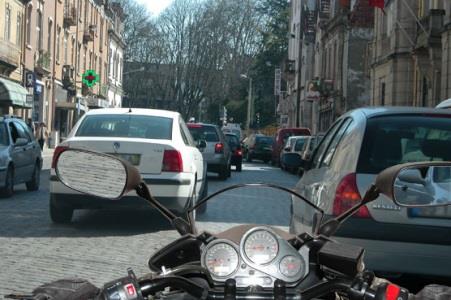
Pedestrians, vehicles turning or parking and nearby junctions make the urban environment change very fast, so constant attention is required.
20 / 82